Why slow leaks do so much damage
A monsoon storm is dramatic, but it’s over in an hour. A leaking irrigation line or a pool that loses an inch a week works quietly, every day, in exactly the same spot. That constant, concentrated water is one of the most common causes of foundation and flatwork settlement we see.
The Arizona Geological Survey explains that collapsible soils, which are loose, dry and under-compacted, can lose volume when they get wet. Much of the soil around West Valley homes, especially fill under patios and pool decks, fits that description. Keep it wet long enough, and it settles.
Pool leaks and foundations
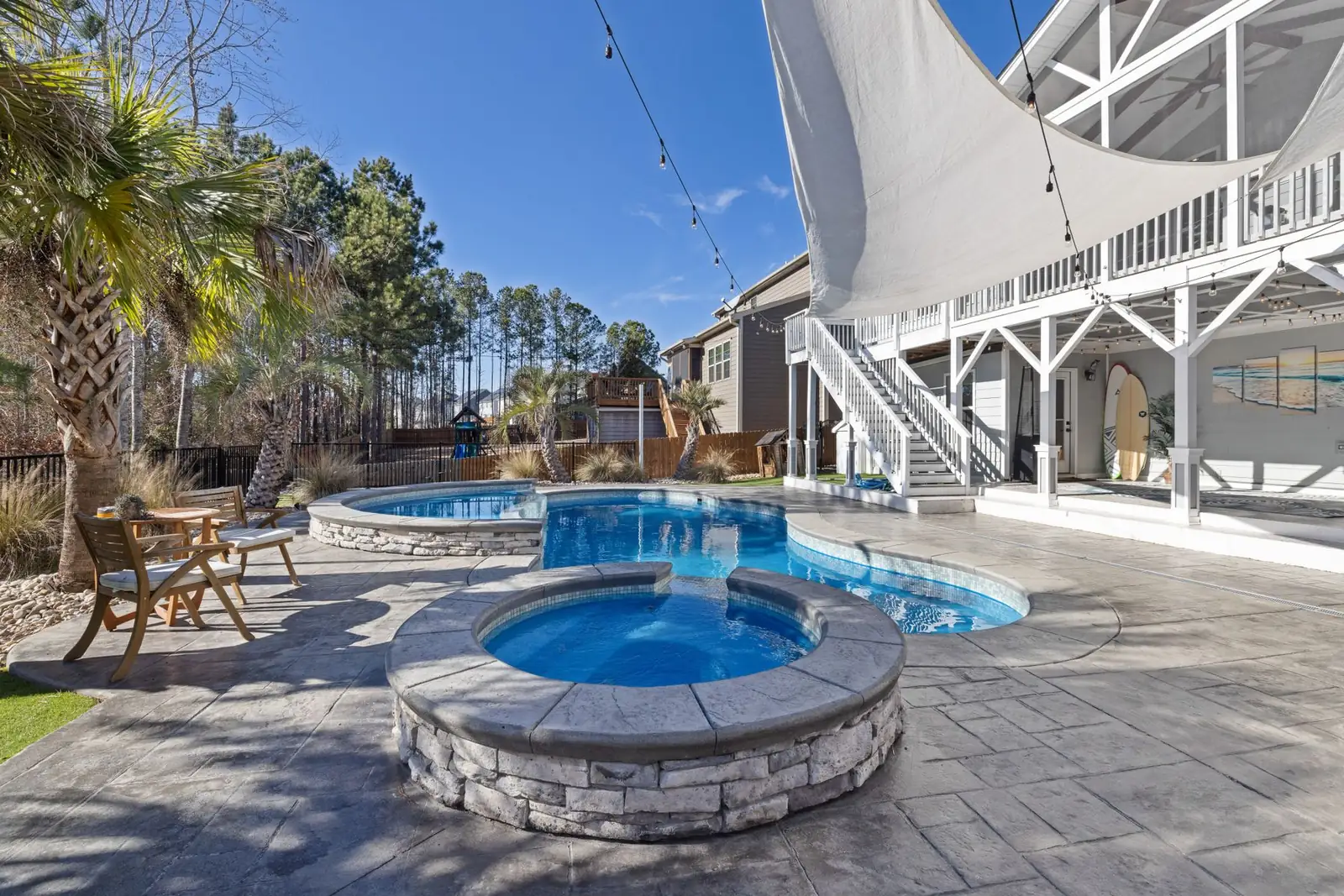
Pools are everywhere in Peoria, from the older neighborhoods near Old Town to the hillside lots of north Peoria. A pool can leak through the shell, the plumbing, the skimmer, the return lines or the equipment pad. Splash-out, overflow and backwash that drain beside the deck add more water.
Signs your pool may be leaking
- You top off the pool more than evaporation would explain, especially in cooler months
- The water bill has crept up
- Soggy soil, unusual weed growth or algae near the pool or equipment
- Cracks in the pool deck, especially near the coping
- The deck has started tilting toward the house or the pool
- Loose tiles or cracks in the pool shell
A simple bucket test can help: set a bucket of water on a pool step, mark the water levels inside and outside the bucket, and compare after a day with the pump off. If the pool drops more than the bucket, a leak is likely, and a leak detection specialist can find it.
Irrigation leaks and foundations
Irrigation is the other big source. Drip lines run along foundations, sprinkler heads get knocked sideways and spray the stucco, and buried lines crack without anyone noticing. In older homes, flood irrigation or lawns watered for decades keep one side of the house wetter than the other.
Signs irrigation is affecting your foundation
- Wet soil or puddles near the house hours after the system shuts off
- Emitters or bubblers placed right against the stem wall
- Stucco stained or deteriorating at the bottom on one side
- Efflorescence on the stem wall
- Interior cracks or sticking doors on the side with the most irrigation
Under-slab plumbing leaks
In older homes, especially those built in the 1960s and 1970s, drain and supply lines under the slab can leak. Signs include a warm or damp spot on the floor, the sound of running water when everything is off, or a water meter that keeps moving. A plumber can pressure-test supply lines and camera-inspect drains.
Fix the water first, then the concrete
The order matters:
- Find the leak. Pool leak detection, an irrigation check or a plumber’s test.
- Fix it. Repair the pool, move or replace irrigation lines, repair the plumbing.
- Let things stabilize. Give the soil time to adjust once the water stops.
- Repair the concrete. For decks, patios and driveways, concrete leveling with foam usually restores them. For the house itself, slab foundation repair may be needed if the footing has settled.
Skipping step one is the most common reason a leveled pool deck drops again.
Preventing leak-related settlement
- Keep drip emitters and sprinkler heads at least a few feet from the foundation
- Check your irrigation system each season for leaks, broken heads and overspray
- Route pool backwash and overflow away from the house and deck
- Track how often you top off the pool
- Watch your water bill for unexplained increases
- Seal the joint between the pool deck and the house so water can’t run beneath it
Leaks and monsoon season together
Leaks don’t take the summer off. During monsoon season, storm water adds to whatever a leak is already putting into the soil, which is one reason settlement sometimes seems to appear suddenly in late summer. Our post on monsoon storms and foundations covers storm prep. For the geology behind it, see our guide to caliche and collapsible soil.
A Peoria example
Picture a north Peoria home near Lake Pleasant Regional Park, built on a graded hillside lot with a pool deck over fill. The pool has a small leak at a return line, and the deck has slowly tilted toward the house. Leveling the deck alone would look great for a season, then the deck would drop again. Fixing the leak first, then leveling and sealing the deck joint, solves it.
Pool and irrigation leak FAQs
Can a pool leak damage my house foundation?
It can. A leaking pool soaks the soil around the pool and deck, and if that soil extends under the house or the leak is close to the foundation, it can cause settlement. Pool decks usually show it first by cracking or tilting. Fixing the leak promptly and checking the deck and nearby walls for movement is the best approach.
How far should irrigation be from my foundation?
Keep drip emitters, bubblers and spray heads at least a few feet from the foundation, and aim spray heads away from the house. Plants that need regular water are better placed farther from the walls. The goal is to keep the soil beside and under the slab at a steady, moderate moisture level rather than constantly wet.
Should I fix the leak or the settled concrete first?
Fix the leak first. If the water source keeps running, it will keep softening the soil, and any leveling or foundation repair will be undermined. Once the leak is repaired and the soil has had time to stabilize, the concrete can be lifted or the foundation stabilized with confidence that it will stay put.