How Anthem was built
Anthem is a master-planned community along Interstate 17 north of Phoenix, begun by Del Webb in the late 1990s. It’s unincorporated, governed day to day by community associations, including the Anthem Community Council, with Maricopa County handling building permits.
Because nearly all of Anthem was built over a relatively short period, its housing stock is remarkably consistent: post-tension slabs, stucco exteriors, tile roofs and desert landscaping, set on lots graded into the rolling foothills around Daisy Mountain and Gavilan Peak. That consistency means we see the same handful of foundation questions across the community.
Hillside lots and cut-fill pads
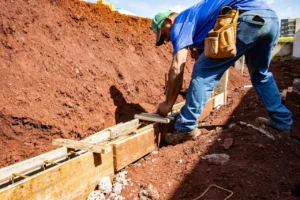
Building in the foothills meant reshaping the land. Developers cut into higher ground and placed fill in lower areas to create level pads, and many Anthem lots include both. Native ground that was cut tends to be firm and stable. Fill, especially deep fill, can continue to consolidate for years, and it reacts to water.
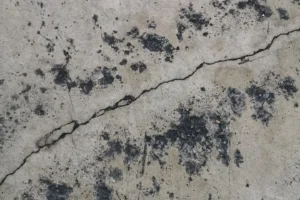
That’s why the classic Anthem call is about flatwork: a driveway dropping at the garage, a patio tilting toward the house, a pool deck cracking near the coping, or a gap opening between a walkway and the stem wall. Homes themselves usually sit on better-compacted pads, but where a slab spans a cut-fill transition, one side can settle more than the other.
Desert washes and monsoon runoff
Anthem is laced with natural desert washes, and during monsoon season they carry a lot of water fast. On sloped lots, runoff from the hills above can reach the back of a house within minutes of a heavy storm. If grading, swales or yard drains don’t move that water around the house, it soaks into fill beside the foundation.
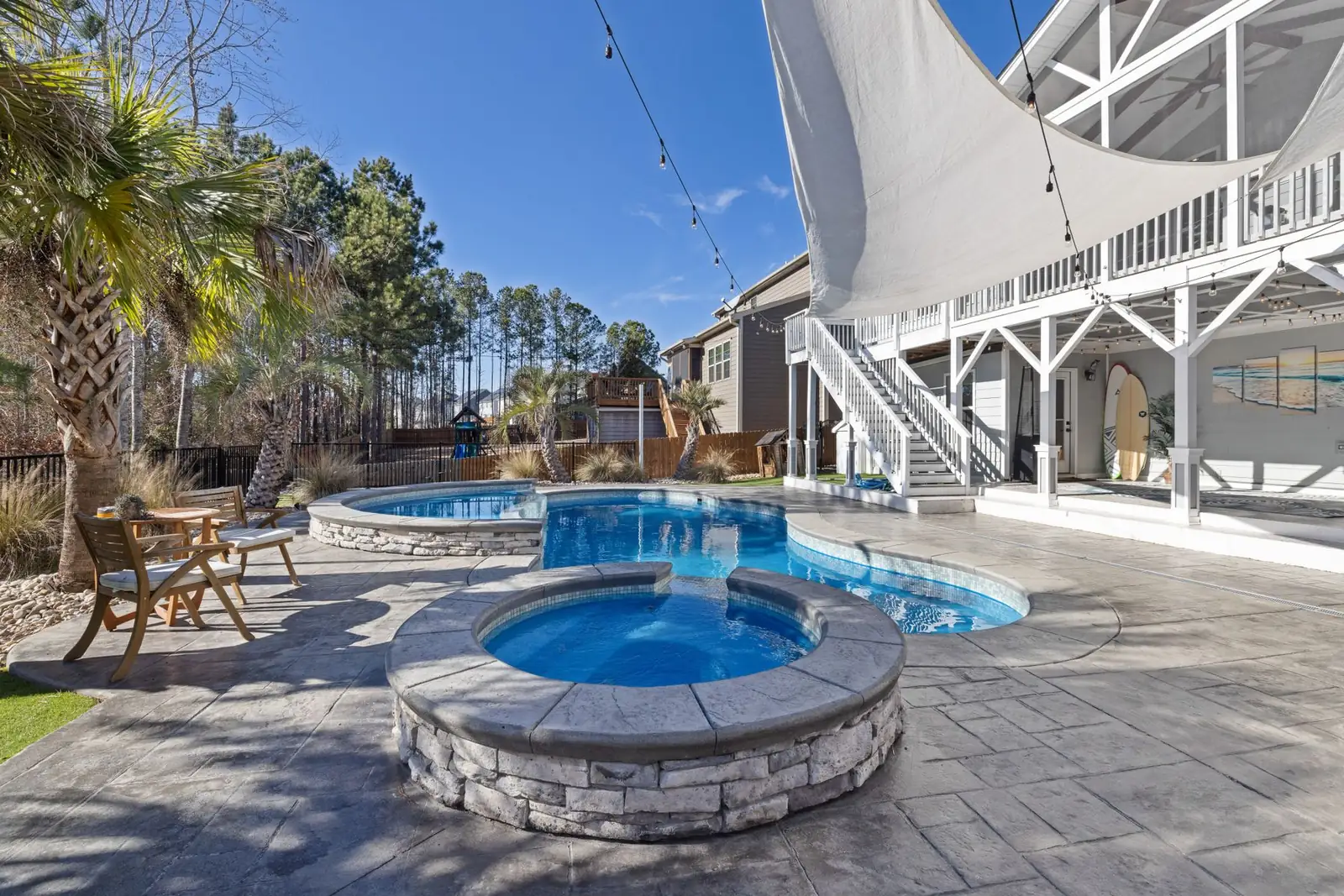
Pool decks deserve special mention. Anthem has many pools, and a deck over fill that also takes splash-out, overflow or a slow leak can settle quickly.
Anthem neighborhoods we serve
- Anthem Parkside: the larger family-oriented side of the community, with a wide range of lot sizes and slopes
- Anthem Country Club: homes around the golf courses, where irrigation along fairways adds moisture near back walls
- Daisy Mountain area: lots closest to the mountain with steeper grades and more retaining walls
- Gavilan Peak Parkway corridor: neighborhoods along the main north-south route, with typical post-tension construction and flatwork settlement
At the center of it all, Anthem Community Park and the Anthem Veterans Memorial are surrounded by neighborhoods that show the community’s typical construction: late-1990s and 2000s post-tension homes on graded lots, now old enough for driveway and patio settlement to appear.
Foundation repair services in Anthem
- Concrete leveling with lightweight polyurethane foam for driveways, garage aprons, patios and pool decks that have dropped over fill
- Helical piers for patio covers, additions and footings on fill, where torque-verified piers can reach firmer material
- Drainage and soil stabilization to manage runoff from slopes and washes and keep irrigation away from the slab
Post-tension slabs in Anthem
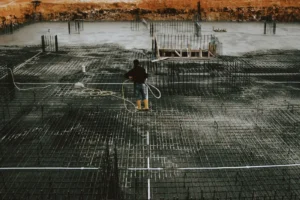
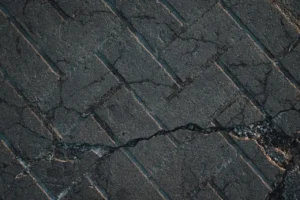
Nearly every Anthem home sits on a post-tension slab. Thin, stable cracks are common and usually harmless. Cracks that widen or offset, rust stains at anchor pockets along the slab edge, or floors that slope toward one side are reasons for a closer look. Because the slab contains tensioned steel tendons, no one should drill, core or cut it until the tendons have been located with ground-penetrating radar.
What an Anthem evaluation covers
We look at the slope above and below the house, how runoff moves during storms, the condition of retaining walls and yard drains, and where the driveway, patios and pool deck sit relative to fill. Inside, we take floor-elevation readings and map cracks and sticking doors against them. You get a written summary that explains what’s moving, why and what we’d recommend.
Building permits in Anthem
Anthem is unincorporated, so building permits come from Maricopa County rather than a city. Structural foundation work generally needs a county permit and often an engineer’s plan. Review Maricopa County Planning and Development’s residential construction guidance before work begins. Exterior changes in Anthem usually also need approval from your community association.
Retaining walls and terraced yards
Many Anthem lots step down the hillside with block retaining walls separating terraces. Those walls hold back soil and water, and when the drains or weep holes behind them clog, water builds up and soaks the fill on the uphill side. Leaning walls, cracks along mortar joints and wet soil at the base of a wall are signs worth noting. A wall problem isn’t always a house problem, but water trapped behind a wall near the foundation can become one.
Protecting a hillside foundation
On an Anthem lot, maintenance is mostly about water. Keep yard drains and the weep holes in retaining walls clear. Make sure downspouts discharge well away from the house. Keep drip emitters a few feet off the foundation. Watch pool water levels, because a pool that needs frequent topping off may be leaking into the fill beneath the deck. And walk the lot after a big monsoon storm to see where water actually went.
Nearby service areas
Anthem sits north of Phoenix along Interstate 17, and north Phoenix neighborhoods like Norterra and Stetson Hills share Anthem’s post-tension slabs and graded lots. Peoria lies to the west via Lake Pleasant Parkway, where Vistancia’s hillside fill has a lot in common with Anthem. See all of our service areas for the full list.
Anthem foundation repair FAQs
Who issues building permits in Anthem, AZ?
Maricopa County Planning and Development issues building permits in Anthem because it’s an unincorporated community. Structural foundation work such as piering or footing repair generally needs a county permit and often an engineer’s plan. Your Anthem community association usually needs to approve exterior changes as well, so check both before work starts.
Why do pool decks settle in Anthem?
Many Anthem pool decks sit on fill placed when hillside lots were graded. Splash-out, overflow, poor drainage or a slow pool leak can soak that fill and cause it to settle. Fixing the water source comes first. Then foam leveling can lift the deck and fill voids, and joints are resealed so water doesn’t wash the soil out again.
Do desert washes near my Anthem home affect the foundation?
They can affect drainage on your lot. During monsoon storms, washes and slopes carry runoff quickly, and if grading or yard drains don’t route it around the house, water can soak into fill beside the foundation. A drainage check during an evaluation shows how water moves across your lot and where it collects.