How Sun City West was built
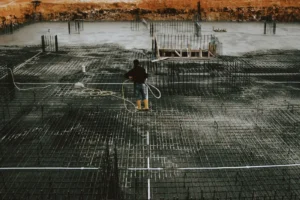
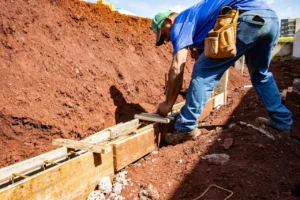
Sun City West followed Sun City as Del Webb’s next active-adult community, with construction starting in 1978 and continuing into the late 1990s. That span matters for foundations. Homes from the late 1970s and 1980s are more likely to sit on conventionally reinforced slabs, while homes from the 1990s are increasingly likely to be post-tension. The two types settle differently and need different repair approaches, so the first thing we confirm on any Sun City West evaluation is which kind of slab the house has.
The community’s history, including how it grew phase by phase, is covered at the Del Webb Sun Cities Museum, which documents both Sun City and Sun City West.
Golf courses, irrigation and settlement
Sun City West is built around golf courses, and many homes back directly onto fairways or greens. Those courses are irrigated heavily and consistently, which keeps the soil along back walls and patios wetter than the soil at the front of the house. Over time, that difference can cause the rear of a slab to settle, patios to tilt toward the house, and block walls along the course to crack.
Inside the yard, mature landscaping adds to it. Shrub beds watered by drip lines placed right against the stucco, and citrus trees irrigated for decades, can soften the soil beside the foundation. Older homes also have slab plumbing approaching the age where leaks become common.
Sun City West neighborhoods we serve
- R.H. Johnson Boulevard area: central Sun City West near the main recreation center, with many 1980s homes
- Grandview and Stardust golf areas: homes along fairways, where golf-course irrigation is a constant factor
- Meeker Boulevard corridor: later phases with more post-tension slabs
- Deer Valley Golf Course area: neighborhoods along the course on the community’s north side
Life here centers on the recreation centers. The neighborhoods around the R.H. Johnson Recreation Center include some of the community’s earlier homes, and they’re a good example of the conventional-slab construction we see in older phases. The Recreation Centers of Sun City West site lists the other centers and golf courses that shape each neighborhood.
What a Sun City West evaluation covers
We start outside: the grading along the golf course or common area, downspouts, irrigation emitters, and the condition of block walls and patios. We check the slab edge for post-tension anchor pockets to confirm the slab type. Inside, we take floor-elevation readings and map cracks and sticking doors against them.
You get a clear written summary that explains what’s moving, why, and what we’d recommend. Many owners like to review it with family before deciding, and that’s exactly how it should work.
Foundation repair services in Sun City West
- Push piers where a section of footing, often at the rear of the house near the course, is still settling and needs support from firmer material below
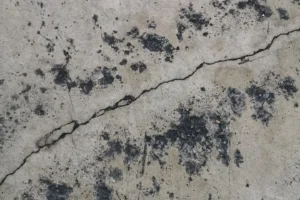
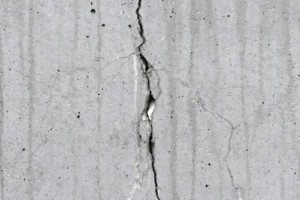
- Foundation crack repair for slab, stem wall and block wall cracks, with the cause addressed before any sealing
- Concrete leveling for patios, walkways and driveways that have dropped, using lightweight polyurethane foam
Conventional vs. post-tension slabs in Sun City West
On a conventional slab, settlement usually shows up as cracks that line up with the low area. On a post-tension slab, the slab often tilts as a unit, so floors slope and doors drift before big cracks appear. If your home is post-tension, any drilling for crack injection or pier brackets must wait until the tendons are located with ground-penetrating radar. We’ll tell you which type you have and what that means for the repair.
Building permits in Sun City West
Sun City West is unincorporated, so building permits come from Maricopa County. Structural foundation work generally needs a county permit and often an engineer’s plan. Review Maricopa County Planning and Development’s residential construction guidance before work begins. Exterior work may also need approval from your homeowners association or the community’s architectural standards.
Subsidence questions
Sun City West sits within the Arizona Department of Water Resources’ West Valley land-subsidence area. That’s slow, regional ground movement measured over years, and it’s rarely the explanation for a crack in one house. Irrigation and plumbing are far more common causes, but it’s reasonable to ask about, and we’ll explain what the state’s maps show.
Patio homes and attached units
Some Sun City West homes are attached patio homes or duplexes that share a wall with a neighbor. Movement on one side of a shared wall can affect the unit next door, so we look at the whole building where possible and explain the findings so both owners and the association understand them.
Keeping a repaired foundation stable
Once a repair is done, the goal is steady soil moisture. That might mean moving drip emitters a few feet off the foundation, adding downspout extensions, sealing the joint between the patio and the house, or talking with the association about drainage along the golf course edge. Small changes like these protect the repair and the rest of the slab.
Nearby service areas
Sun City West borders Surprise to the north and west, where newer post-tension neighborhoods face many of the same irrigation issues, and sits just west of Sun City, its older sister community. See all of our service areas for the full list.
Sun City West foundation repair FAQs
Who issues building permits in Sun City West?
Maricopa County Planning and Development issues building permits in Sun City West because it’s an unincorporated community. Structural foundation repair such as piering generally requires a county permit and often an engineer’s plan. Your homeowners association or the community’s architectural standards may also need to approve exterior work before it starts.
Can golf-course irrigation damage my foundation?
It can contribute. Heavy, constant irrigation along a fairway keeps the soil near back walls and patios wetter than elsewhere on the lot, and in loose desert soil that can lead to settlement at the rear of the house. Good drainage along that edge and keeping your own irrigation off the foundation help reduce the effect.
Is my Sun City West home on a post-tension slab?
It depends on when it was built. Homes from the late 1970s and 1980s are more likely to have conventionally reinforced slabs, while 1990s homes are more likely to be post-tension. Look for grout-patched anchor pockets along the slab edge or a “do not drill” stamp in the garage, or ask us to confirm during an evaluation.