How slab-on-grade foundations settle in Peoria
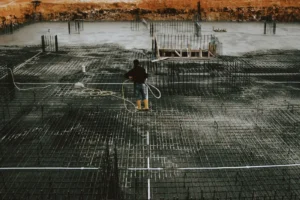
Almost every house in Peoria is built on a slab-on-grade foundation: a concrete slab poured directly on prepared soil, thickened at the edges into a footing or set on a short stem wall. There’s no crawl space and no basement, so when the soil under one part of the slab loses support, that part of the house drops with it.
The soil itself is the reason. Much of the Peoria area is mapped as shallow desert soil over a cemented hardpan, and the Arizona Geological Survey describes how loose, dry desert deposits can collapse when they’re wetted. Put those two facts together and you get the classic Peoria settlement pattern: one corner of the house, usually the one with the most water nearby, drops a fraction of an inch to an inch or more while the rest of the slab stays where it was poured.
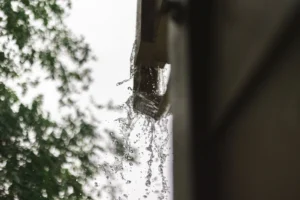
In the older streets around Old Town Peoria, we often trace that water to cast-iron drain lines under 1960s and 1970s slabs, or to flood irrigation that soaked the same yard for decades. In 1980s and 1990s neighborhoods like Westbrook Village, it’s more often a downspout, a planter bed against the wall or a leaking hose bib.
Conventional slabs vs. post-tension slabs
Homes built before roughly the 1990s usually have conventionally reinforced slabs, with rebar or welded wire mesh cast into the concrete. Most Valley tract homes since then sit on post-tension slabs, where greased steel tendons run through the slab and are tightened after the concrete cures. The two behave differently when they settle, and they’re repaired differently.
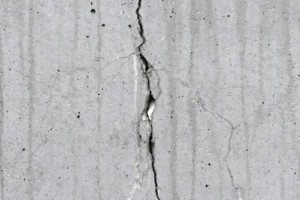
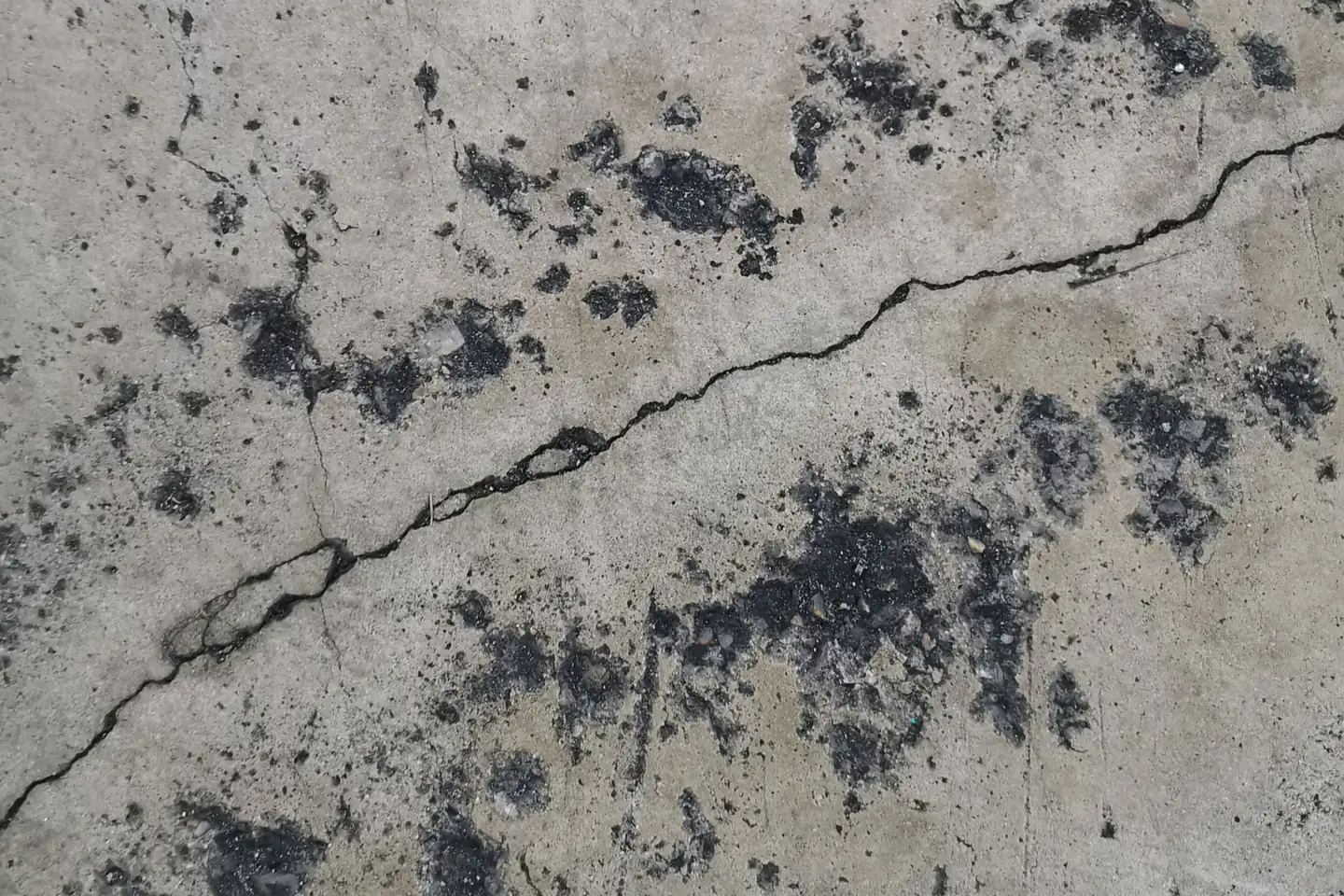
A conventional slab tends to crack where it bends, so you’ll see cracks that line up with the low area. A post-tension slab is stiffer and often tilts as a unit, which shows up as sloping floors and doors that drift out of square before any big crack appears. If your home is post-tension, see our post-tension slab repair page, because no one should drill or core that slab until the tendons have been located.
Signs your slab foundation is settling
One crack rarely tells the whole story. We look for a pattern, and these are the pieces that usually make it up:
- Doors that stick, swing open on their own or show uneven gaps at the top of the frame
- Diagonal drywall cracks running up from the corners of doors and windows
- Tile or stone floors cracking along a line, or grout popping out in a row
- Gaps between baseboards and the floor, or between the ceiling and an interior wall
- Exterior stucco cracks that line up with an interior crack on the same wall
- Floors you can feel sloping, or a marble that rolls to the same corner every time
If you’re seeing two or three of these on the same side of the house, the slab has probably moved. Our guide to the warning signs of foundation problems walks through each one in more detail.
Repair methods for a settled slab
There’s no single slab repair. The method depends on how far the slab has moved, whether it’s still moving, and what’s underneath it.
Stabilizing with piers
When a section of the foundation is still settling, steel piers transfer the load past the soft soil to firmer material below. Push piers use the weight of the house to drive steel pipe down through a bracket at the footing. Helical piers are screwed in and verified by torque, which suits lighter loads and tight spaces. Either way, the pier layout usually comes from an engineer, and the lift is limited to what the structure can tolerate without new damage.
Filling voids and lifting with foam
Where the slab has lost contact with the soil but the soil below is reasonably firm, polyurethane foam injected through small holes can fill voids and lift the concrete. Foam is common for garage slabs, patios and flatwork, and sometimes for interior slab sections once the cause has been fixed.
Fixing the water source
This is the part people skip, and it’s the part that decides whether the repair lasts. That can mean a plumber’s leak test on the drain lines, moving irrigation away from the stem wall, adding downspout extensions or regrading the side yard so water runs away from the house.
Permits and engineering for slab repair in Peoria
Structural slab and footing repair isn’t on Peoria’s list of permit-exempt work, so plan on a building permit for any piering or structural repair. The city’s Plan Review and Permits page covers submittals, and an engineer’s letter or pier plan is common for this kind of work. Cosmetic patching and flatwork leveling near grade generally don’t need a permit, but it’s worth confirming before work starts.
Slab repair in the communities around Peoria
The same soil story plays out next door with different housing stock. Many Sun City homes are 1960s and 1970s conventional slabs with aging under-slab plumbing, while Glendale mixes mid-century slabs downtown with 1990s post-tension tracts in Arrowhead Ranch. We adjust the evaluation to the age and type of slab in front of us.
What to expect after a slab repair
Once the foundation is stable, the cosmetic damage can be repaired: drywall cracks taped and painted, doors re-hung, and cracked tile replaced. We recommend waiting a short period after a pier lift before finishing those repairs, so any minor settling of the finishes happens first. And we’ll point out the drainage or irrigation habits that keep the soil under your slab at a steady moisture level from then on.
Slab foundation repair FAQs
How do I know my slab foundation is settling?
Several signs together point to settlement more than any single crack does. Look for sloping floors, doors that stick or swing on their own, diagonal drywall cracks at door and window corners, and gaps at baseboards, especially on the same side of the house. A floor-elevation survey confirms it by showing exactly where the slab sits low.
What’s the difference between a conventional slab and a post-tension slab?
A conventional slab is reinforced with rebar or wire mesh cast into the concrete, while a post-tension slab uses steel tendons that are tightened after the pour to squeeze the concrete together. Most Peoria tract homes built from the 1990s on are post-tension, and those slabs need tendon scanning before anyone drills or cores them.
Can a settled slab be lifted back to level?
Often it can be partly lifted with piers or foam, but the first goal is to stop the movement. Older settlement may not come all the way back without cracking finishes that have adjusted to the new position, so a good plan sets a realistic lift target based on floor-elevation readings and what the structure can tolerate.
Will slab repair fix my cracked tile and drywall?
Slab repair stops the movement that caused the damage, but it doesn’t erase the cracks themselves. Cosmetic repairs like drywall patching, door adjustments and tile replacement happen afterward, once the structure is stable. Some doors start closing properly again after a lift, while cracked tile and grout usually need to be replaced.