What a post-tension slab is and why it matters
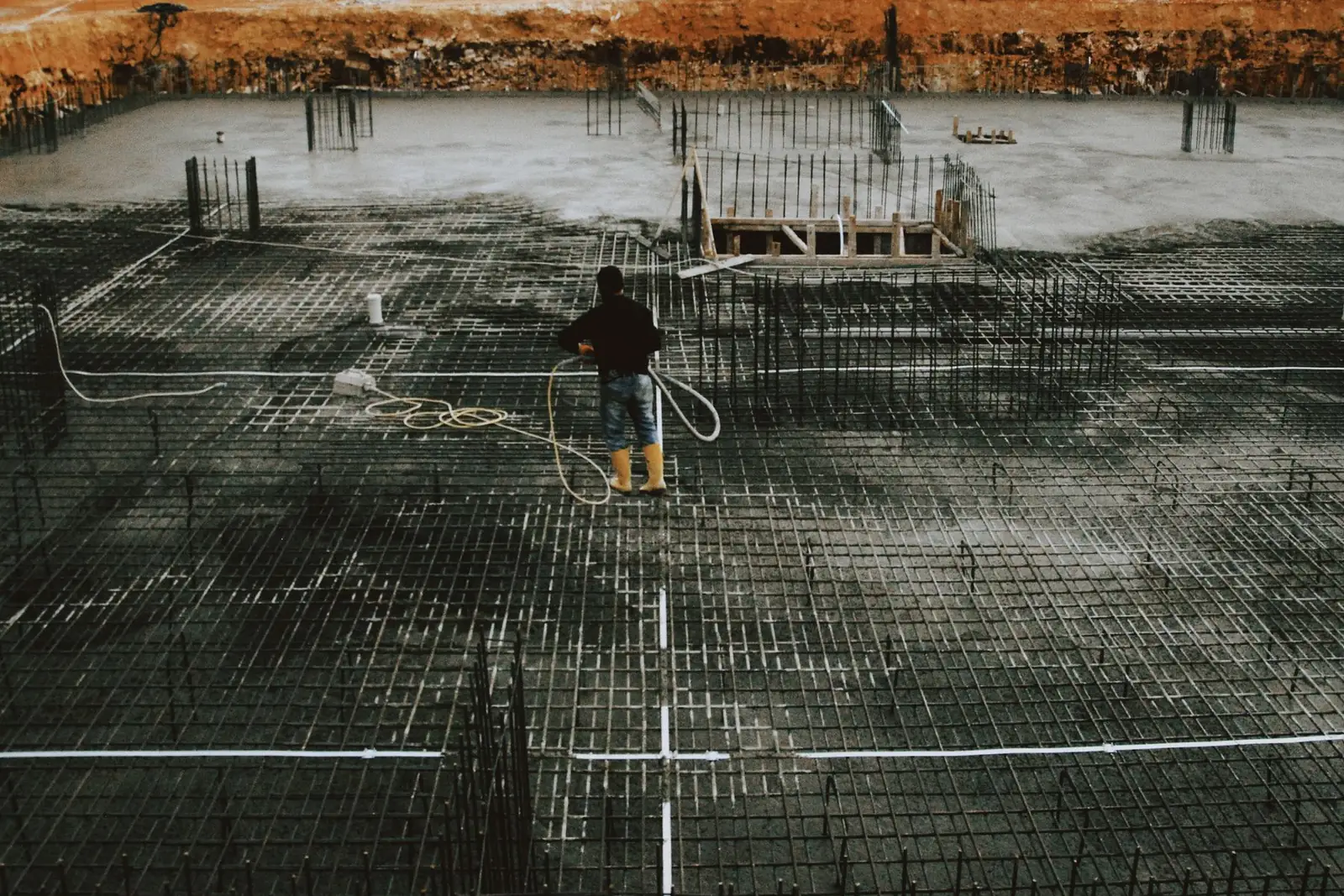
A post-tension slab has bundles of high-strength steel strand, called tendons, running through it in both directions. Each tendon is wrapped in a greased plastic sheath so it can slide inside the concrete. A few days after the pour, crews stretch the tendons with hydraulic jacks and lock them at anchors along the slab edge. That squeeze keeps the slab in compression, so it can span soft spots and resist cracking better than a conventional slab of the same thickness.
That’s why builders across the Valley adopted them, and why nearly every home in north Peoria master-planned communities such as Vistancia sits on one. The same is true of the newer neighborhoods around the Peoria Sports Complex and most subdivisions built north of Bell Road. Post-tension design is a standard practice backed by the Post-Tensioning Institute, which publishes the guidance most repair specifications follow.
How to tell if your home has a post-tension slab
You can usually confirm it in a few minutes:
- Look along the garage slab edge or the base of the exterior stem wall for small, round or rectangular patches of grout about every few feet. Those are the anchor pockets where tendons were tensioned and cut.
- Check the garage floor for a stamped or painted warning such as “post-tensioned slab, do not drill or cut.”
- Look at the original plans, builder documents or permit records for PT tendon layouts.
- Consider the build year. If your Peoria house was built in the mid-1990s or later, assume it’s post-tension until proven otherwise.
Common post-tension slab problems
Post-tension slabs are tough, but they aren’t immune to trouble. These are the issues we evaluate most often:
- Corroded or exposed anchors. When the grout patch over an anchor pocket cracks or was never placed well, water reaches the anchor and rust follows. Rust stains or spalling at the slab edge are the clue.
- Broken tendons. A tendon can fail from corrosion or from someone drilling into it during a remodel, a plumbing repair or a fence post installation. A broken tendon may push out of the slab edge, and the slab loses compression along that line.
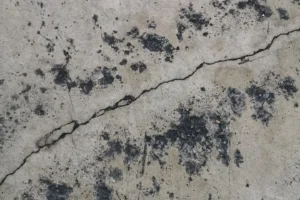
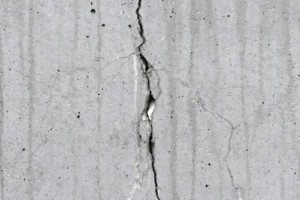
- Cracks that widen or offset. Thin shrinkage cracks are common, but a crack that keeps growing or shows one side higher than the other suggests movement or lost tension.
- Slab tilt from soil movement. A post-tension slab is stiff, so it often settles as a unit. Floors slope and doors drift out of square before large cracks appear.
Not every crack is a tendon problem. Our post on whether post-tension slab cracks are normal explains which hairline cracks you can usually ignore.
Our post-tension slab repair process
1. Locate the tendons before touching anything
We scan the area with ground-penetrating radar to map tendon positions and depth before any drilling, coring or cutting. This applies to every job on a post-tension slab, including crack injection, plumbing access and pier brackets.
2. Expose and assess
For anchor or tendon problems, the damaged area is carefully opened up so the condition of the strand, sheathing and anchor can be seen. Corrosion, a broken strand or a failed anchor each call for a different fix.
3. Repair and re-tension
Depending on what’s found, a damaged section can be spliced with a coupler, a new anchor installed, or the tendon replaced and re-tensioned to the design force. Exposed anchors are cleaned, protected and sealed with non-shrink grout so water can’t reach them again. This is specialized work that should follow PTI repair guidance.
4. Close up and address the cause
Concrete is patched, and we look at why the problem started. If water got to an anchor because of a sprinkler head aimed at the slab edge, that gets moved. If the slab is tilting from settlement, it may need foundation inspection with floor-elevation readings and a pier plan rather than tendon work.
Cracks in a post-tension slab
Many calls are about cracks, not tendons. Hairline cracks that stay put are typically shrinkage, and they can be sealed for appearance or to keep moisture out. Cracks that are wider, growing or offset get a closer look, and our foundation crack repair page covers how those are injected or stabilized. On a post-tension slab, that injection work only happens after a radar scan.
Post-tension homes around the West Valley
Post-tension slabs dominate newer neighborhoods throughout the region, from Sun City Grand and Marley Park in Surprise to Verrado and Festival Foothills in Buckeye. Builders across these communities used similar designs, so the same questions about anchors, cracks and drilling come up in every one of them.
Who should work on a post-tension slab
Ask anyone who will drill, cut or repair your slab how they locate tendons and who performs tendon repairs. In Arizona, check that the contractor’s license class covers the work on the ROC’s license classifications list, which includes classes that specifically cover post-tension reinforcing. Structural repairs on a home generally need a building permit in Peoria.
Post-tension slab repair FAQs
How can I tell if my house has a post-tension slab?
Look for small grout-patched anchor pockets spaced along the garage or slab edge, a “do not drill or cut” stamp on the garage floor, or tendon layouts in the original plans. In Peoria and across the Valley, homes built since the mid-1990s usually have one, so it’s safest to assume post-tension until someone confirms otherwise.
Can you drill into a post-tension slab?
Not until the tendons are located. Drilling or coring into a tendon can damage or snap a tensioned cable, which is dangerous and expensive to fix. That’s why we scan with ground-penetrating radar before any drilling, coring, cutting or pier bracket installation, and mark safe locations on the slab before work begins.
What happens if a tendon breaks?
A broken tendon loses its compression along that line, and the strand may push out at the slab edge. The damaged section can be exposed, then spliced with a coupler or replaced and re-tensioned to its design force by a crew trained in post-tension repair, with the anchor sealed afterward so water can’t reach it.
Who should repair a post-tension cable?
Choose a contractor whose Arizona ROC license class covers post-tension reinforcing work and who follows Post-Tensioning Institute repair guidance. Ask how they locate tendons, what equipment they use to re-tension, and whether the job needs a permit. Look the company up on the ROC Contractor Search before signing anything.