What land subsidence is
Much of the Valley sits on deep basins filled with sediment, and those sediments hold groundwater. When groundwater is pumped out faster than it’s replaced, fine-grained layers within the sediment compact, and the land surface slowly sinks. The U.S. Geological Survey explains that this kind of compaction is largely permanent, even if groundwater levels later recover.
Subsidence happens over large areas and long periods. You can’t see it from one year to the next, but it’s measured with satellite radar and precise survey data.
The West Valley subsidence feature
The Arizona Department of Water Resources monitors a West Valley land-subsidence feature whose footprint includes parts of Sun City, Sun City West, Surprise, Peoria and Glendale. ADWR tracks it with satellite radar (InSAR) and GPS data and links it to historical groundwater withdrawal.
Being inside that footprint doesn’t mean a particular house is damaged. Regional subsidence lowers broad areas fairly evenly, and a whole neighborhood sinking a little at the same rate typically doesn’t crack a slab. Problems come where the ground moves unevenly.
What earth fissures are
Earth fissures are cracks in the ground that can form where subsidence is uneven, often near the edges of basins or over buried bedrock ridges. They can start as hairline cracks and widen dramatically when runoff erodes them, sometimes into gullies several feet wide. The Arizona Geological Survey maps known fissures in its earth fissure study areas, including a study area around Luke Air Force Base in the West Valley.
How to check a property
- Open the AZGS Natural Hazards Viewer. The AZGS hazard viewer lets you search an address and see mapped earth fissures and other hazards nearby.
- Review ADWR’s subsidence information to see whether the area falls within a monitored subsidence feature.
- Read the seller’s disclosure and ask about any known ground cracking.
- Get an on-site evaluation if the home shows signs of movement, so you know whether the cause is local soil and water or something larger.
Subsidence vs. ordinary settlement
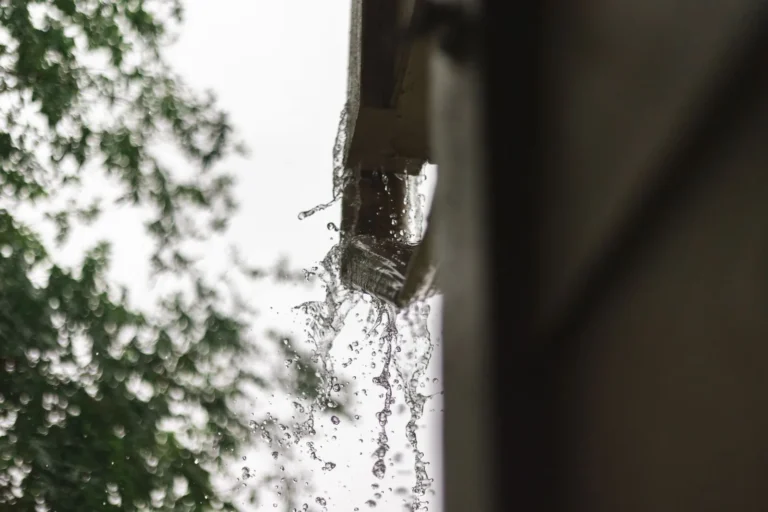
Most foundation problems in Peoria have nothing to do with regional subsidence. They come from water reaching loose desert soil near the house: a leak, irrigation against the wall, a downspout at the foundation or storm runoff ponding at the slab edge. Our guide to caliche and collapsible soil explains why that local water matters so much.
The difference shows up in the pattern. Local settlement usually affects one part of a house, near a water source. Fissure-related movement is rare, tied to mapped hazard areas and often visible as ground cracking outside the home.
What this means for buyers
If you’re buying in the West Valley, especially in areas near Luke Air Force Base or within ADWR’s subsidence footprint, check the maps as part of due diligence. Combine that with a foundation inspection if the home shows cracks or sloping floors. Our guide to foundation checks before buying a home lists the full set of steps.
What this means for repairs
If an evaluation finds settlement, the repair is based on what’s actually causing it. In the vast majority of homes, that means fixing water problems and, if needed, slab foundation repair with piers. For homes near mapped fissures, an engineer’s evaluation is especially important before designing a repair.
Peoria’s growth and groundwater
Arizona’s groundwater management laws and the use of surface water from the Salt, Verde and Colorado rivers have reduced pumping in many parts of the Valley compared with past decades. Subsidence continues in places, though, which is why ADWR keeps monitoring it. Neighborhoods across Peoria, from the older streets near Old Town Peoria to newer communities in the north, sit on the same basin, so the topic comes up citywide.
Earth fissure and subsidence FAQs
Is Peoria, AZ affected by land subsidence?
Parts of Peoria fall within the Arizona Department of Water Resources’ West Valley land-subsidence feature, which also includes parts of Glendale, Surprise and the Sun Cities. Regional subsidence is slow and fairly even, so it rarely explains cracks in a single house. Most home settlement still comes from local water and soil conditions.
How do I check if there are earth fissures near my home?
Search the address on the Arizona Geological Survey’s Natural Hazards Viewer, which shows mapped earth fissures and other hazards. You can also review AZGS earth fissure study area maps, such as the Luke study area. If you see signs of ground cracking on a property, get an on-site evaluation.
Can foundation repair fix subsidence damage?
Foundation repair can stabilize a home that has settled, but it can’t stop regional subsidence. For most homes, settlement comes from local water and soil, and repairs address that directly. For homes near mapped fissures, an engineer’s evaluation is important so any repair accounts for the site’s specific conditions.