A community built in the 1960s and 1970s
Del Webb opened Sun City on January 1, 1960, and it grew into one of the best-known active-adult communities in the country. The Del Webb Sun Cities Museum tells that story well, from the first model homes to the recreation centers that still anchor community life. For foundation purposes, the important part is when most of the homes were built: the 1960s and 1970s, before post-tension slabs became standard in the Valley.
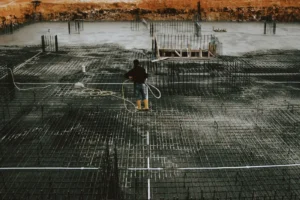
That means most Sun City homes sit on conventionally reinforced slabs with rebar or wire mesh, often with a thickened edge footing. Under those slabs run the original drain lines, frequently cast iron, that are now well past fifty years old. When a drain line cracks or a joint separates, water soaks the soil directly under the floor, sometimes for months before anyone notices. Combine that with lawns and shrub beds that have been watered for decades, and you get the settlement patterns we see most in Sun City.
Sun City neighborhoods and what we see in each
- Phase I, south of Grand Avenue: the oldest part of Sun City, with many of the original 1960s homes. Drain-line leaks, stem wall cracks and settled patios are common.
- Lakeview and the Viewpoint Lake area: homes near the lakes and golf courses, where irrigation runs close to back walls and patios.
- Bell Road corridor: later phases from the 1970s, with similar slab construction and a lot of mature landscaping.
- Boswell Boulevard area: a mix of single-family homes, duplexes and patio homes, where shared walls mean movement on one side can show up next door.
Life in Sun City revolves around the recreation centers, and many homeowners know the Recreation Centers of Sun City and the Sun Bowl Amphitheater better than any landmark in Phoenix. The homes around those centers are the ones we work on most: modest single-story houses, often with block construction and carports, on slabs that have been carrying them for sixty years.
Signs of foundation trouble in an older Sun City home
Because the slab and plumbing are older, the warning signs can look a little different from those in a newer house:
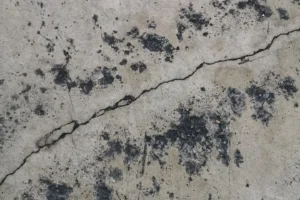
- A crack across terrazzo, tile or vinyl flooring that keeps getting wider
- Doors between rooms that stick or won’t latch, especially on one side of the house
- A water bill that creeps up, or a spot on the floor that feels warm or damp
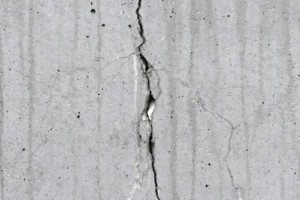
- Stair-step cracks in block walls or carport columns that lean
- Gaps where the patio slab meets the house, or a patio that tilts toward the wall
If two or three of those show up together, it’s worth having the floors measured. Our guide to stucco cracks vs. foundation cracks also helps sort out which exterior cracks matter.
Fix the water first
In Sun City more than almost anywhere, the first recommendation is often a plumber’s leak test on the drain and supply lines. If a leak is feeding the soil under the slab, no structural repair will hold until it’s fixed. After that, the right repair depends on how much the slab has moved and whether it’s still moving.
Foundation repair services in Sun City
- Slab foundation repair for conventional slabs that have settled, including stabilizing the area once the leak is fixed
- Foundation crack repair for stem wall, block wall and slab cracks, with epoxy for dormant structural cracks and flexible sealants where movement may continue
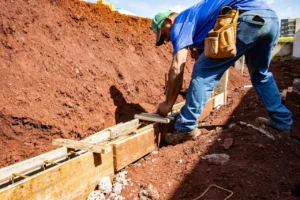
- Push piers where a section of footing is still settling and needs support from firmer material below
How we work with Sun City homeowners
Many of our Sun City customers are retired and have lived in their homes for a long time. We keep the evaluation straightforward: we walk the outside, measure the floors, explain what we see without jargon, and write down the options so there’s time to talk them over with family. There’s no pressure to decide on the spot, and if the honest answer is that a crack is cosmetic, that’s what we’ll say.
Building permits in Sun City
Sun City is an unincorporated community, so building permits come from Maricopa County rather than a city. Structural foundation work such as piering generally needs a county permit and often an engineer’s plan. Review Maricopa County Planning and Development’s residential construction guidance before work starts. Some properties also have rules from their homeowners or condominium association.
Subsidence and Sun City
The Arizona Department of Water Resources tracks a West Valley land-subsidence area that includes Sun City. Regional subsidence moves slowly over a wide area and is rarely the reason one house is cracking. In Sun City, local water from leaks and irrigation is a far more common cause, which is why we start there.
Nearby service areas
Sun City borders Youngtown, which has some of the only homes in the area older than Sun City’s, and Peoria itself. To the west, Sun City West continues the Del Webb story with homes built from the late 1970s on. Our service areas page lists every community we cover.
Sun City foundation repair FAQs
Who issues building permits for foundation repair in Sun City, AZ?
Maricopa County Planning and Development issues building permits in Sun City because it’s an unincorporated community, not a city. Structural foundation work such as piering or footing repair generally needs a county permit and often an engineer’s plan. Your homeowners or condominium association may also have rules about exterior work.
Why do so many Sun City homes have under-slab leaks?
Most Sun City homes were built in the 1960s and 1970s with drain lines, often cast iron, running beneath the slab. Those lines are now more than fifty years old, and cracks or separated joints let water soak the soil under the floor. A plumber’s leak test is often the first step before any foundation repair.
Can you repair a foundation in a Sun City duplex or patio home?
Yes, though shared walls add a step. Movement on one side can affect the neighboring unit, so the evaluation looks at the whole building where possible, and the association may need to approve work on common elements. We explain findings clearly so both owners and the association understand what’s involved.