One of the fastest-growing places in the country
Buckeye has grown faster than almost anywhere in the United States, and it covers a huge area, roughly 395 square miles stretching from the historic downtown along Monroe Avenue up into the White Tank foothills and out toward the far West Valley. Because it’s so large, we keep our observations tied to specific neighborhoods rather than making claims about the whole city.
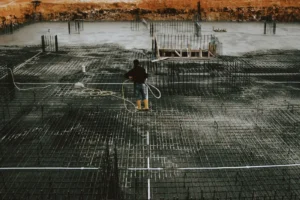
What most Buckeye homes have in common is age. The great majority were built from the 2000s on, almost all on post-tension slabs. Many are now passing the ten-year mark, which is when driveway, patio and pool-deck settlement starts to show and when owners first notice drywall cracks and sticking doors.
Buckeye neighborhoods we serve
Verrado
Verrado climbs into the foothills of the White Tank Mountains, with homes on graded pads, retaining walls and sloping streets. Lots that combine cut native soil with placed fill can settle unevenly, and slope drainage needs constant attention. Flatwork over deeper fill is often the first thing to move.
Festival Foothills and Sun City Festival
Farther north, Festival Foothills and the 55-plus Sun City Festival sit on similar foothill terrain, with newer post-tension homes, desert washes and monsoon runoff that can be intense on slopes.
Sundance and Tartesso
Sundance and Tartesso are flatter, with 2000s homes on post-tension slabs. Settled driveways and patios, and drainage in narrow side yards, are the usual calls.
Downtown Buckeye
The historic downtown has older homes on conventional slabs, with aging plumbing and stem wall cracks more common than in the master-planned communities.
White Tank foothills and graded lots
The White Tank Mountains shape much of north Buckeye. Building on their foothills meant cutting and filling to create level pads, and that work has a predictable side effect: where fill is deep, it can keep consolidating for years, especially when irrigation or storm water soaks in. Retaining walls hold back slopes, and the drains behind them must stay clear or water collects against the wall and the house.
Skyline Regional Park, the city’s mountain park in the White Tank foothills, shows the terrain clearly: steep, rocky slopes feeding washes that carry monsoon runoff downhill toward neighborhoods.
Post-tension slab cracks in newer homes
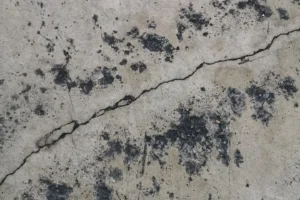
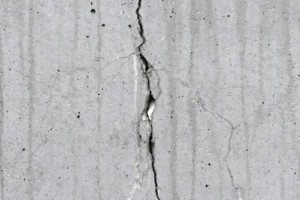
Owners of newer Buckeye homes often call about cracks in the garage floor or in a slab exposed during a flooring project. Most thin, stable cracks in a post-tension slab are shrinkage from curing, and they’re common. Cracks that widen, offset or come with sloping floors and sticking doors are different, and they deserve an evaluation. Any drilling to inject a crack or install a bracket on a post-tension slab must wait until the tendons are located with ground-penetrating radar.
Foundation repair services in Buckeye
- Post-tension slab repair, including radar scanning, anchor repair and tendon repair where needed
- Concrete leveling with lightweight foam for driveways, garage aprons, patios and pool decks that have settled over fill
- Drainage and soil stabilization for sloped lots, retaining walls and side yards where water collects against the foundation
What a Buckeye evaluation looks at
On a foothill lot in Verrado or Festival Foothills, we look at the slope above and below the house, how runoff moves during storms, the condition of retaining walls and where the flatwork sits on fill. On a flatter Sundance or Tartesso lot, we focus on side-yard drainage, downspouts, irrigation and the driveway-to-garage joint. Inside every home, we take floor-elevation readings and map cracks and doors against them.
Monsoon season on sloped lots
The National Weather Service defines monsoon season in the Phoenix area as June 15 through September 30. On sloped Buckeye lots, a short, intense storm can send a lot of water across a yard in minutes. Keep yard drains and the drains behind retaining walls clear, make sure downspouts carry water away from the slab, and look after each storm for erosion or water standing against the house.
Building permits in Buckeye
The City of Buckeye issues its own building permits. Structural foundation work such as piering generally needs a permit and often an engineer’s plan. Check current requirements through the City of Buckeye before work starts. Most Buckeye communities also have HOA review for exterior changes.
Newer homes and independent evaluations
Many Buckeye homes are new enough that owners first contact their builder about cracks or settlement. When the builder’s answer doesn’t resolve the concern, or you simply want a second set of eyes, an independent evaluation with floor-elevation readings gives you a clear picture of what’s happening and whether it’s getting worse. Keep notes and dated photos of any cracks from the day you first notice them. A simple record like that is often the best evidence of whether movement is active, and it makes any later evaluation faster and more accurate.
Pools and backyard concrete in Buckeye
Pools are standard in many Buckeye neighborhoods, and the decks around them are usually poured over the same fill as the rest of the backyard. A slow pool leak, splash-out that drains under the deck, or a backwash line that empties beside the patio can soften that fill. If the deck has started to tilt or crack near the coping, a leak check is a smart first step before any leveling.
Nearby service areas
Buckeye borders Goodyear to the east, where Estrella’s foothill lots share many of the same fill and drainage questions, and sits southwest of Surprise, whose newer neighborhoods have similar post-tension slabs. See all of our service areas for the full list.
Buckeye foundation repair FAQs
Are cracks in my new Buckeye home’s slab normal?
Thin, stable hairline cracks are common in post-tension slabs and usually come from shrinkage as the concrete cures. Cracks that keep widening, show one side higher than the other, or appear with sloping floors and sticking doors suggest movement and deserve an evaluation. Nobody should drill into the slab without locating the tendons first.
Why do driveways and patios settle on Verrado hillside lots?
Foothill lots in Verrado were graded with cut and fill, and the fill under driveways and patios can keep consolidating for years, especially when irrigation or storm runoff soaks in. Flatwork over deeper fill usually moves first. Foam leveling restores it, and better drainage keeps it from settling again.
Who issues foundation repair permits in Buckeye?
The City of Buckeye issues building permits for properties within city limits. Structural foundation work such as piering or footing repair generally needs a permit and often an engineer’s plan. Check current requirements with the city before work begins, and confirm whether your HOA needs to review the project too.