A planned town with a long history
Litchfield Park began as a company town for the Goodyear Tire and Rubber Company, which farmed cotton here in the early twentieth century. The town was laid out with wide streets, generous lots and abundant trees, and that character remains today. The P.W. Litchfield Heritage Center preserves much of that history, and it’s worth a visit if you want to understand how the community took shape.
For foundations, Litchfield Park’s history shows up in three ways: older homes in the historic core, large lots with heavy irrigation, and mature trees whose roots and watering needs affect the soil around slabs.
The Wigwam and the neighborhoods around it
The Wigwam, which opened to the public as a resort in 1929, is the city’s landmark, and its golf courses wind through several residential areas. Homes near the fairways often back onto heavily irrigated turf, which keeps the soil along rear walls and patios wetter than at the front of the house. That’s a common thread in the settled patios and rear-wall cracks we see near the resort.
Litchfield Park neighborhoods we serve
- Historic core along Wigwam Boulevard: older homes, some on early slabs or shallow footings, with mature trees and large irrigated yards
- Litchfield Park village center: a mix of mid-century homes and newer infill on varied foundations
- Neighborhoods around the Wigwam golf courses: larger homes, many on post-tension slabs, with golf-course irrigation along back walls
The city’s parks, including Memorial Park and Turtle Park, listed on the Litchfield Park city parks page, sit among some of these older neighborhoods, where shade trees and irrigated grass are part of what makes the town feel so different from newer West Valley suburbs.
Large lots, mature trees and soil moisture
Big lawns and old trees are a big part of Litchfield Park’s appeal, and they’re also a big part of the foundation conversation here. A large irrigated lawn keeps the soil near the house wet, and a mature tree can draw a lot of moisture from soil beneath one side of a slab during hot, dry stretches. Where soils include clay, that cycle of wetting and drying can cause both swelling and shrinkage. Where soils are loose, concentrated watering can cause settlement.
We look at both during an evaluation: where irrigation runs, how close large trees stand to the foundation, and whether one side of the house behaves differently from the other.
Subsidence and earth fissures near Luke Air Force Base
Litchfield Park is the closest community to Luke Air Force Base, and that brings a question we hear more here than anywhere else. The Arizona Geological Survey maps earth fissures in Maricopa County, including a study area around the base, and its Luke study area earth fissure map is publicly available. The Arizona Department of Water Resources also monitors land subsidence across the West Valley.
These maps show regional conditions, not a verdict on any particular house. Most foundation problems in Litchfield Park still come from local water and soil around the home. But if you’re buying or have concerns, it’s sensible to check the property on the AZGS hazard viewer, and we can walk you through it during an inspection.
Foundation repair services in Litchfield Park
- Foundation inspection with floor-elevation readings and crack mapping, including a review of subsidence and fissure maps for the property
- Slab foundation repair for settled slabs in older and newer homes, with the water source addressed first
- Helical piers for additions, patio covers and lighter footings, common on larger lots where homes have been expanded over the years
Older homes and additions
Many homes in the historic core have been expanded over the decades with added rooms, enclosed porches and garages. Those additions often sit on their own footings, and the joint where old meets new is one of the most common places for cracks. We evaluate each part of the house separately so repairs target the section that’s actually moving, and we pay attention to preserving the character of older homes.
How a Litchfield Park evaluation works
Outside, we look at grading, irrigation, downspouts, tree placement and the condition of patios and walls. Inside, we take floor-elevation readings and map cracks and sticking doors against them. If the home is near the base, we include a look at the state’s hazard maps. You get a written summary of what we found and what we recommend, in plain language.
Building permits in Litchfield Park
The City of Litchfield Park handles building permits for properties within city limits. Structural foundation work generally needs a permit and may need an engineer’s plan. Check current requirements through the City of Litchfield Park before work begins.
Protecting a foundation on a large irrigated lot
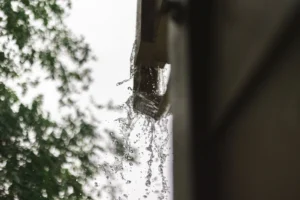
On a big Litchfield Park lot, a few habits go a long way. Keep sprinkler heads and drip emitters a few feet away from the foundation. Water deeply and less often rather than shallowly every day. Give large trees their own irrigation zones away from the house. Extend downspouts beyond planting beds. And check after monsoon storms for water pooling against the walls.
Nearby service areas
Litchfield Park borders Goodyear to the south and west, where newer master-planned neighborhoods dominate, and Avondale to the southeast, with its older Western Avenue core and newer tracts. See every community we serve on our service areas page.
Litchfield Park foundation repair FAQs
Is Litchfield Park affected by earth fissures near Luke Air Force Base?
The Arizona Geological Survey maps earth fissures in a study area around Luke Air Force Base, and the Arizona Department of Water Resources monitors West Valley subsidence. Those maps show regional conditions, not problems at a specific house. Check the property on the AZGS Natural Hazards Viewer, and remember most home settlement still comes from local water and soil.
Can mature trees damage my foundation in Litchfield Park?
They can contribute. Large trees draw moisture from soil near a slab during hot, dry periods, and heavy irrigation for trees and lawns can wet the soil on one side of the house. That uneven moisture can cause movement. Giving trees separate irrigation zones away from the foundation helps keep soil moisture steadier.
Who issues foundation repair permits in Litchfield Park?
The City of Litchfield Park handles building permits for properties within city limits. Structural foundation work such as piering or footing repair generally needs a permit and may need an engineer’s plan. Check with the city before work starts and confirm with your contractor who will apply for the permit.