Glendale’s housing stock, block by block
Glendale shares a long border with Peoria, and the two cities trade a lot of the same soil. What changes as you cross Glendale is the age of the homes, and that changes the kind of foundation work they need.
In the Catlin Court Historic District and the streets around Historic Downtown Glendale, many homes date from the early and middle twentieth century. Some sit on shallow footings or early slabs that predate modern reinforcement practices. Foundation calls there often involve stem wall cracks, settled porches and additions that were built on a different footing than the original house. The district’s character also means any exterior repair should respect the original materials, and the shops and bungalows that draw visitors to Historic Downtown Glendale are a reminder of how long some of these structures have been standing.
Moving north and west, central Glendale fills in with 1960s, 1970s and 1980s subdivisions on conventionally reinforced slabs. These are the homes where we most often find under-slab drain leaks and decades of flood or lawn irrigation along one side of the house.
Arrowhead Ranch and the neighborhoods near it in north Glendale were built mostly from the late 1980s into the 2000s, with many homes on post-tension slabs. Some sit near lakes and greenbelts that are irrigated heavily. Here the common problems are sloping floors on a stiff slab, settled driveways and patios, and anchor or crack concerns that require a tendon scan before any drilling.
Around the Westgate and Zanjero area near State Farm Stadium, homes are newer still, and calls are mostly about flatwork settlement and drywall cracks in the first ten to twenty years.
Soil and ground movement in Glendale
Glendale’s soils follow the same broad desert pattern as Peoria’s: thin, often gravelly soils with caliche layers in places, plus pockets of finer soil that can collapse when wetted or swell where there’s clay. That’s why a leaking irrigation line or a downspout pointed at the stem wall causes so much of the damage we see.
West Glendale adds another layer. The Arizona Department of Water Resources tracks a West Valley land-subsidence area that includes parts of Glendale, and the Arizona Geological Survey has mapped earth fissures in its study area around Luke Air Force Base. That doesn’t mean any particular Glendale street has a fissure, and most residential settlement still comes down to local water and soil. But if you’re buying in west Glendale, it’s worth checking the address on the state’s hazard maps, and we can show you how during an evaluation.
Glendale landmarks and the neighborhoods around them
We spend a lot of time in the neighborhoods surrounding Glendale’s parks. Homes near Thunderbird Conservation Park in north Glendale sit closer to the hills, where lots are more varied and drainage from higher ground matters. The neighborhoods around Historic Sahuaro Ranch, once a working fruit ranch, sit on land that was farmed and irrigated for generations before it became subdivisions, which can mean variable fill and softer soil in places.
Foundation repair services in Glendale
We bring the same evaluation-first approach to every Glendale home, then recommend only what the house needs:
- Slab foundation repair for settling conventional and post-tension slabs, including piers where a footing is still dropping
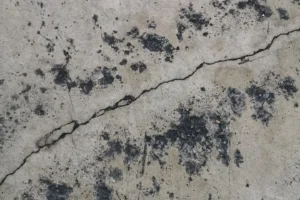
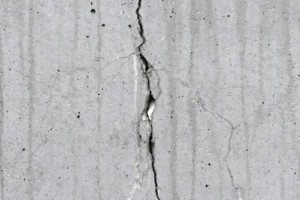
- Foundation crack repair for stem wall, block wall and slab cracks, from epoxy injection on dormant cracks to stabilizing the cause of active ones
- Foundation inspection with floor-elevation readings for owners, buyers and sellers, which is especially useful in older central Glendale homes and in west Glendale where subsidence questions come up
What a Glendale evaluation looks at
On a Catlin Court bungalow, we focus on footing depth, additions, porches and how water drains off older roofs without gutters. On a 1970s central Glendale ranch, we look closely at drain-line leak signs and the irrigation history of the yard. On an Arrowhead Ranch post-tension home, we check anchor pockets along the slab edge, the slope of the floors and the condition of the flatwork, and we plan any drilling around a radar scan.
Every evaluation ends with floor-elevation readings, a crack map and a plain explanation of what’s moving and why.
Lakes, greenbelts and irrigation in north Glendale
Arrowhead Ranch’s lakes and greenbelts make it one of the most attractive parts of Glendale, but heavy irrigation next to back walls keeps the soil there wetter than elsewhere. When a patio or pool deck backs onto a greenbelt, we check how water drains along that edge.
Building permits in Glendale
Glendale issues its own building permits through the city’s development services and building safety staff, separate from Peoria’s. Structural foundation work such as piering generally requires a permit, and an engineer’s plan is common. Check current requirements through the City of Glendale website before work begins, and confirm who will pull the permit.
Nearby service areas
Glendale borders several of the communities we serve. Just north and west, older slabs in Youngtown share Glendale’s mid-century building age, while north and west Phoenix continues the same mix of 1960s slabs and newer post-tension tracts to the east. See all of our West Valley service areas for the full list.
Glendale foundation repair FAQs
Who issues building permits for foundation repair in Glendale, AZ?
The City of Glendale issues its own building permits for properties inside city limits, separate from Peoria and Maricopa County. Structural foundation work such as piers or footing repair generally needs a permit and often an engineer’s plan. Check current requirements with Glendale’s development services staff and confirm who will pull the permit before work starts.
Are older homes near Catlin Court harder to repair?
They can take more care. Some early twentieth-century homes have shallow footings, additions on different foundations and original materials worth preserving. The evaluation looks at how each part of the house is supported, and repairs are planned so they stabilize the structure without changing its historic character more than necessary.
Does west Glendale have land subsidence?
Parts of west Glendale fall within the Arizona Department of Water Resources’ West Valley land-subsidence area, and the Arizona Geological Survey maps earth fissures in its study area near Luke Air Force Base. Check a specific address on the AZGS Natural Hazards Viewer. Most home settlement still comes from local water and soil, not regional subsidence.